
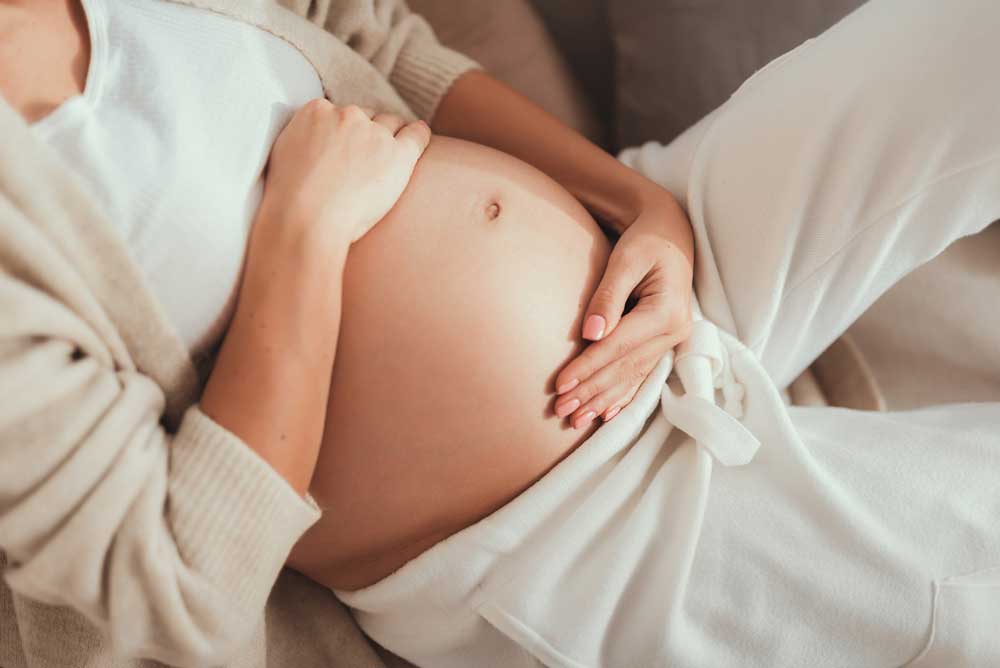
Pregnancy can leave lasting changes on the abdomen — including stretched skin, weakened muscles, and stubborn fat deposits that exercise alone cannot address. A tummy tuck (abdominoplasty) after pregnancy can restore a firmer, flatter abdominal profile and repair separated abdominal muscles. This article explains when a tummy tuck is appropriate, what the procedure involves, how to prepare, and what to expect from your recovery and final results at Blooming Plastic Surgery.
One of the most beautiful and demanding achievements the female body can accomplish is carrying a child. It is entirely natural that the traces of this will be visible to a greater or lesser extent. A tummy tuck after pregnancy is therefore a procedure that many women consider.
Not only is the skin of the abdomen stretched enormously, but the straight abdominal muscles also shift outwards from the midline. In the centre of these muscles, space is created for the baby, and in many cases this space remains — a condition known as diastasis. A tummy tuck after pregnancy will generally be a so-called full tummy tuck. That is to say, not only is fat removed and the skin tightened, but the straight abdominal muscles are also drawn back together — a process known as plication. A tummy tuck after pregnancy may also involve repositioning the navel if a significant amount of skin is removed.
It is not a minor procedure, but the results are generally excellent. A flat abdomen makes a significant difference to how your entire body looks. Clothing fits better, you appear slimmer, and your posture also improves in a positive way.
There are some prerequisites for a tummy tuck after pregnancy. If you are still considering having more children, it may be worth waiting. You should also be close to the weight you expect to maintain in the future. Significant weight gain after the procedure would partly undo the effect of the surgery, which would be a great shame.