Thinking about removing an unwanted tattoo? Modern laser technology has made safe and effective tattoo removal more accessible than ever. This article explains how laser tattoo removal works, what to expect during the treatment process, how many sessions you may need, and what factors influence the outcome. Whether your tattoo is a youthful decision you regret or simply no longer fits who you are, Blooming's specialists can guide you through your options for achieving clear skin again.
A tattoo is an image or text that is placed by a tattoo artist beneath the second skin layer (1.5 to 2 mm depth) of the body. During tattooing, an electrically driven tattoo machine is used in combination with various colours of ink. When the tattoo is applied, the skin cells absorb the ink and encapsulate it.
This means a tattoo remains permanently visible for life. Of course, it may happen that you have regrets afterwards, or that you need to have your tattoo removed for professional reasons. Fortunately, tattoos can be removed in several ways. In this blog, laser removal and surgical removal are discussed.
Laser Tattoo Removal
Laser removal is the most commonly chosen method for removing tattoos. The laser beams heat the pigment, causing it to break apart. The broken pigments are absorbed by the surrounding cells, broken down, and removed by your own body. This takes several weeks, which is why there are also a number of weeks between treatments. The advantage of this treatment is that in most cases no skin damage or scarring occurs. Disadvantages are that the laser treatment is not entirely painless and that you require multiple treatments.
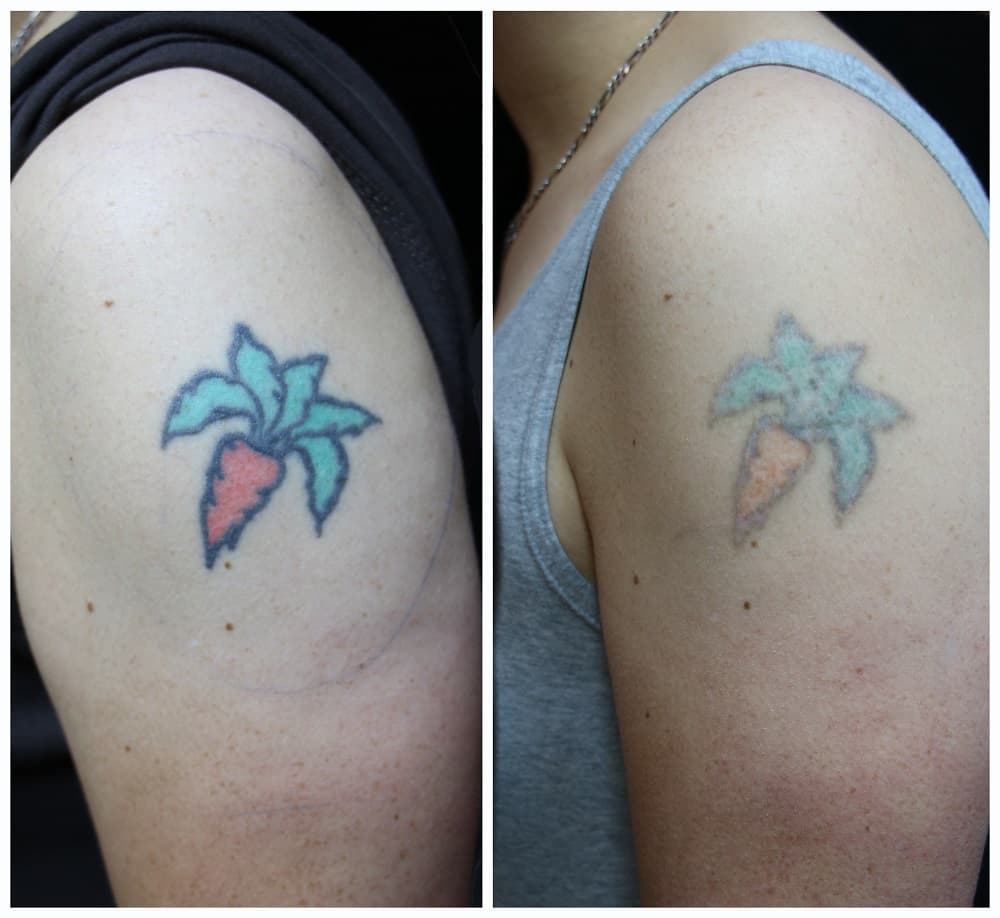
Example of Laser Tattoo Removal
Some tattoos disappear after just five treatments, but it is common to require ten or more. This depends on various factors:
- Black ink is the easiest to remove, because black absorbs all wavelengths of the lasers. Colourful tattoos therefore require more treatments.
- The larger the tattoo, the more treatments you will need.
- Skin colour also plays a role. Because darker skin already contains a lot of pigment naturally, this can block the laser beams, making the treatment less effective.
Throughout the entire course of treatment, it is very important that the lasered area is not exposed to the sun or sunbed. This can negatively affect the treatment. Should you be exposed to the sun, you must protect the lasered area adequately. This can be done, for example, by covering the area with tape and/or protecting it with clothing. Always apply sunblock to the area as well.
Surgical Tattoo Removal
Since the advent of the laser, surgical tattoo removal has been used less and less, and is increasingly falling out of favour. If you have your tattoo removed surgically, the skin around the tattoo is anaesthetised, the tattoo itself is cut away, and the area is sutured. Cutting away a tattoo can result in scarring. For this reason, laser treatment is often preferred, and typically only small tattoos are removed by excision. Healing of the wound takes approximately 6 weeks, but it is only after a year that you can definitively see how the scar will look.
Are you considering having your tattoo removed? For more information, please contact the clinic via the contact form, e-mail or by telephone: 023 533 3974.