Scarring is a natural part of the healing process, but the appearance of scars can vary greatly depending on genetics, wound care, and surgical technique. This article explains how scars form, what factors influence their appearance, and what treatment options are available to minimise their visibility. At Blooming Plastic Surgery, scar care is an important part of every patient's post-operative journey, and our team is here to support optimal healing from the very first days of recovery.
Scars can have a significant impact on self-confidence. Particularly when located in a very visible area, they can be a barrier in daily life. Shame often plays an important role. But what exactly is a scar, and what can you do about it when you find it bothersome?
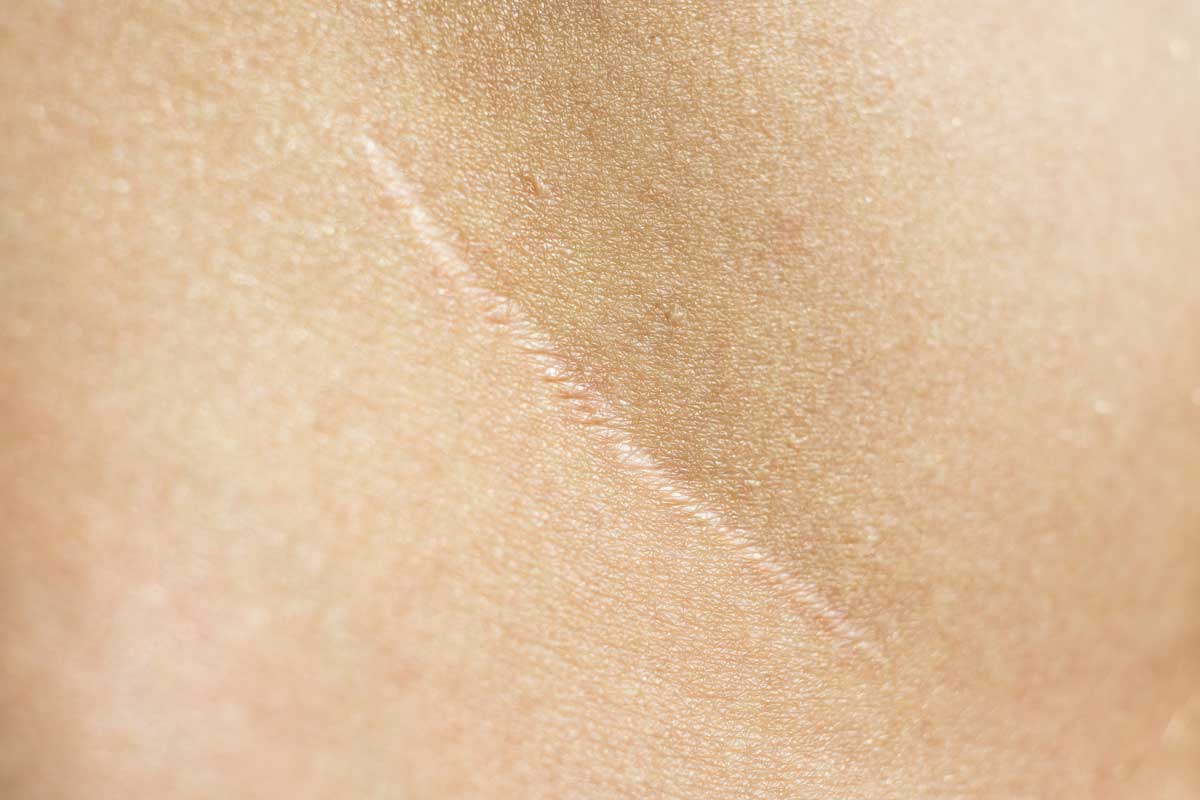
Scars are damage to the skin caused by accidents, surgery, or diseases such as chickenpox. They are a natural part of the skin's healing process. The more damaged your skin is, the longer it takes to heal fully, and the greater the chance of a visible scar remaining.
Risk Factors for Scar Formation
In addition to the severity of the damage, there are a number of risk factors that can influence (abnormal) scar formation.- Heredity: People can have a family predisposition that influences the form scarring takes.
- Skin type: People with darker skin have an increased risk of developing (abnormal) scars.
- Age: The older the skin, the longer it takes for a wound to heal. Because younger skin heals more quickly, there is a risk of excessive new skin formation, which can cause the skin and scar to become larger and thicker.
- Location: The more mobile and muscular the area, the longer the healing process and the wider and more noticeable the scar.
- Complications and infections: An infection caused by, for example, poor hygiene increases the risk of complications and an abnormal scar.
Types of Scars
Once a wound has healed, various types of scars can form, depending on the factors above:- Mature/normal scar: A light-coloured, flat scar formed during uncomplicated healing. Depending on the shape of the wound, nothing more than a pigment-free spot or streak remains.
- Immature scar: A red, sometimes itchy or sensitive, slightly raised scar. Because it has not yet fully matured, this scar can still flatten and become less visible over time.
- Atrophic scar: An atrophic scar is a small, round depression that sits lower than the surrounding skin. Atrophic scars form when the healing process is disrupted and insufficient new connective fibres can be formed — for example due to infections such as acne and chickenpox, or radiotherapy.
- Hypertrophic scars: Hypertrophic scars are often red, thick, and swollen in appearance. The scar may feel painful and itchy. Within a few months to a year, the scar can increase in size. After a process of approximately two years, it can also gradually become less visible naturally.
- Keloid scar: Keloid scars are an overgrowth of scar tissue and are often larger than the original wound. They occur mainly on the chest, back, shoulders, and earlobes, and are often red or darker in colour than the surrounding skin.